

Saturday 21 March 2026 11:30
A REMARKABLE act of generosity by a young Omagh student is offering hope to someone battling blood cancer.
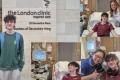
Twenty-year-old Tiernan Carlin, from Tamlaght Road, recently travelled to The London Clinic where he donated stem cells that could potentially save - or significantly extend - the life of a patient in need.
What makes Tiernan’s story even more extraordinary is just how rare such a match can be. Last year, out of thousands of people registered as stem cell donors, only seven individuals were identified as a match for a patient.
The chances of being a compatible donor are incredibly small - making Tiernan’s opportunity to help someone truly special.
Even more impressively, the first-year university student donated 10 million stem cells - double the five million required - giving the patient the best possible chance of a successful transplant.
Tiernan first joined the stem cell donor register three years ago after attending a well-being clinic in Omagh, inspired by the sad passing of his uncle, Nishey Harte from Loughmacrory, who died from cancer in October 2016.
His details were added to the register run by DKMS UK, the international charity that helps find stem cell donors for patients with blood cancers and disorders.
Last December, Tiernan received the call that he was a potential match - an unusually quick development given how rare matches can be. This was followed by a series of blood tests in London to confirm the compatibility.
After further successful checks, Tiernan travelled to London again earlier this year for the donation procedure.
Before the transplant, Tiernan received injections of G-CSF (Granulocyte-Colony Stimulating Factor) for several days. These injections stimulate the bone marrow to produce and release more stem cells into the bloodstream, ensuring enough cells can be collected.
“The injections, four of them into the lower stomach, were a little painful and I got some swelling in my lower back area,” Tiernan explained.
“I had a bit of nausea and headaches and had to take a few days off work.”
The donation itself involved a process called apheresis, where blood circulates through a machine that separates and collects stem cells before returning the rest of the blood to the body.
“The final operation was meant to take about five hours,” Tiernan said.
“Your blood circulates around and it collects the stem cells and plasma and combines them into a stem cell cocktail. I was meant to donate five million cells, but I donated 10 million in just two and a half hours - so it went really well.

Stay connected to us to get the latest news and updates.




Tyrone Constitution
25-27 High Street, Omagh
BT78 1BD
Tel: 028 8224 2721