

Sunday 22 March 2026 13:00
A CASTLEDERG man has spoken powerfully at Stormont about the murder of his brother and his long campaign for truth and accountability, as part of events marking the European Day of Remembrance for Victims of Terrorism.
John Sproule was one of four victims and survivors who addressed a special gathering at Parliament Buildings last week, organised to recognise those affected by terrorism and to highlight the ongoing needs of victims and their families.
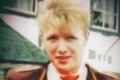
Mr Sproule spoke about the brutal killing of his brother, Ian Sproule, who was murdered by the Provisional IRA in Castlederg on April 13, 1991 at just 23 years-old.
Ian, a joiner by trade, lived at home with his parents and was remembered by his brother as a cheerful young man who loved football, supported Everton and played the flute in the local band. He had also begun learning to play the guitar.
“He was simply full of life,” Mr Sproule told the audience.
“When you were around Ian, a smile was always on your face. He just had a way of brightening life up, whatever the situation.”
On the night he was killed, Ian had been returning home from a friend’s birthday party. After arriving at his parents’ home, he got out of his car to open the garage door before getting back into the driver’s seat.
It was then that two Provisional IRA gunmen opened fire, killing him in what Mr Sproule described as a “hail of 41 bullets”.
Shortly afterwards, the family received a taunting phone call.
“A caller rang the house and said to our father, ‘Have you seen the mess we left you outside yet?’,” Mr Sproule recalled.
He spoke emotionally about the moment he arrived at the family home after hearing his brother had been shot.
“I got a knock at my door and was told Ian had been shot. Not knowing if he was alive or dead, I made my way to my parents’ house.
“The sight that met me is something I will never forget. Ian was slumped over the steering wheel. He was dead. That has haunted me from that night and always will.”
Mr Sproule said the murder had a devastating and lasting impact on his family, particularly their mother.
“She never left the house after Ian’s murder,” he said.
“She didn’t want to talk to or see anyone outside the family. We had to do all the shopping for her. She didn’t even go to the hairdresser — my dad had to cut her hair.”
He said the only time she would leave the house was to visit her grandson, who was named Ian.
“The night the IRA murdered Ian, they murdered my mother too,” he said.
“I would go to see her and she would be crying, saying, ‘I just want my wee cub back.’ There was nothing I could do.”
Mr Sproule has been seeking justice for his brother since 2014, when the Smithwick Tribunal heard evidence suggesting collusion between members of the Gardaí and the Provisional IRA.
A senior detective told the tribunal he was “satisfied beyond doubt” that there had been collusion between the Irish police force and the IRA in Ian’s murder.
Since then Mr Sproule has met a number of senior figures in the Irish government and justice system, including Taoiseach Micheál Martin, former Tánaiste Simon Coveney, former Justice Minister Charlie Flanagan and representatives from the Garda Síochána Ombudsman Commission (GSOC).
He told the Stormont audience that GSOC initially indicated there was a case to answer regarding collusion but later informed him that it had no funding to pursue an investigation.
“A year later they sent me an email to say they had no money to investigate,” he said.
Mr Sproule said his family believes there must be a full and independent public inquiry by the Irish State into Ian’s murder.
“We have heard the words reconciliation, equality and human rights,” he said.
“But all we have received are empty words and no actions.”
He also highlighted the wider impact of IRA violence in the Castlederg area during the Troubles.
Between August 1971 and October 2001, 29 people from Castlederg and the surrounding district were murdered by the Provisional IRA, including civilians and members of the security forces.
Of those victims, 28 were Protestants, nine were civilians and two were women. Twelve of the 20 members of the security forces killed were off duty at the time.
Only two murder charges were ever brought in connection with the killings.
Among those murdered were the first Ulster Defence Regiment soldier to be killed in Northern Ireland and the youngest police officer to die during the Troubles.
The list of victims includes Winston Donnell, Kenneth Smyth, Daniel McCormick, William Clark, William Bogle, William Brown, Jacob Rankin, Brian Russell, William Clarke, Lexie Cummings, Thomas Harron, Ronnie Finlay, Greg Elliott, Thomas Loughlin, Norman McKinley, Heather Kerrigan, Jackie Hamilton, Victor Foster, William Pollock, Desmond Caldwell, Michael Darcy, William Monteith, Stephen Montgomery, Olven Kilpatrick, Andrew Bogle, Ian Sproule, Ronnie Finlay, Annie Bogle and Charles Folliard.
Mr Sproule told the event he would never stop pursuing justice for his brother.
“Ian was not only my brother but also my best friend,” he said.
“He was an innocent young man who never got the chance to live his life, get married or have children. The IRA took all that away from him and from our family.”
The Stormont event was organised as part of wider commemorations for the European Day of Remembrance for Victims of Terrorism.
Kenny Donaldson, director of the South East Fermanagh Foundation (SEFF), said the day is an important opportunity to show solidarity with victims and survivors.
“Lighting up for the European Day of Remembrance of Victims of Terrorism is an important symbolic representation of support for innocent victims and survivors,” he said.
He said a number of buildings were illuminated red to mark the occasion, including The Island Arts Centre in Lisburn and St Columb’s Cathedral in Derry/Londonderry.
Mr Donaldson also noted that the UK now formally recognises August 21 as the National Day of Remembrance for Victims of Terrorism, aligning it with the International Day of Remembrance of Victims of Terrorism.
“Recognition dates in themselves are not enough,” he said.
“Governments must drive policy changes which deliver for innocent victims and survivors across their full needs - including health and wellbeing, welfare, justice, truth, accountability and acknowledgement.”
SEFF helped facilitate two events marking the day - one at Parliament Buildings in Stormont and another at the Palace of Westminster in London.
The Stormont event was sponsored by Timothy Gaston MLA, while the Westminster event was supported by Lord Tom Elliott.
Other speakers at Stormont included Travis Frain OBE, who survived the London Bridge terror attack, Denise Mullen, daughter of Denis Mullen, and Pastor Stephen Thompson, nephew of Yvonne Dunlop.
Speakers at the Westminster event included Geraldine Ferguson, mother of Sapper Patrick Azimkar, and Simon Utley, a soldier who survived the Hyde Park bombing.
Mr Donaldson thanked organisers and public representatives from across the political spectrum for supporting the events and helping to highlight the experiences of victims and survivors of terrorism.

Stay connected to us to get the latest news and updates.




Tyrone Constitution
25-27 High Street, Omagh
BT78 1BD
Tel: 028 8224 2721